A few years ago, lifts in homes were not so common; people who used to install lifts in their homes also did not think of aesthetics of lifts to match their house, but now it's changing. Homeowners are paying more attention to the lift cabin, wall finishes, lighting, flooring, and even the way the lift connects with the staircase or foyer. Modern villas, duplexes, and multi-storey homes are increasingly looking for interiors that combine comfort, functionality and a premium visual appeal.
Lifts that were made of stainless steel are now being covered in panels with warm wooden finishes, stone finishes, and brushed metallic details. For example— A combination such as walnut wood, beige panels, and champagne-metal accents can give the lift a sophisticated but welcoming appearance.This is where customised wall finishes and panel solutions can make a difference. The same material language used on a home's feature wall, staircase or foyer can be carried into the lift to create a more cohesive look. Wallfabrica's approach already focuses on personalized wall finishes and interior solutions rather than one-size-fits-all designs.
PVC panels can be one of the best options for these lifts. Since they come in different shades of wood and are easy to install and remove as well.
Minimalism does not mean keeping things plain. It's more about removing excessive visual elements to add highlight rest of the elements.
Flush control panels, clean wall surfaces, concealed fittings and simple hardware help create a seamless cabin. Instead of multiple decorative elements competing for attention, the focus is on proportion, materials and lighting.
This approach works especially well for modern home lift designs in Bangalore, where contemporary villas and urban homes often favour clean architectural lines.
You must have seen the glass lifts in movies during the late 90s. They were already there , but they have evolved with time.
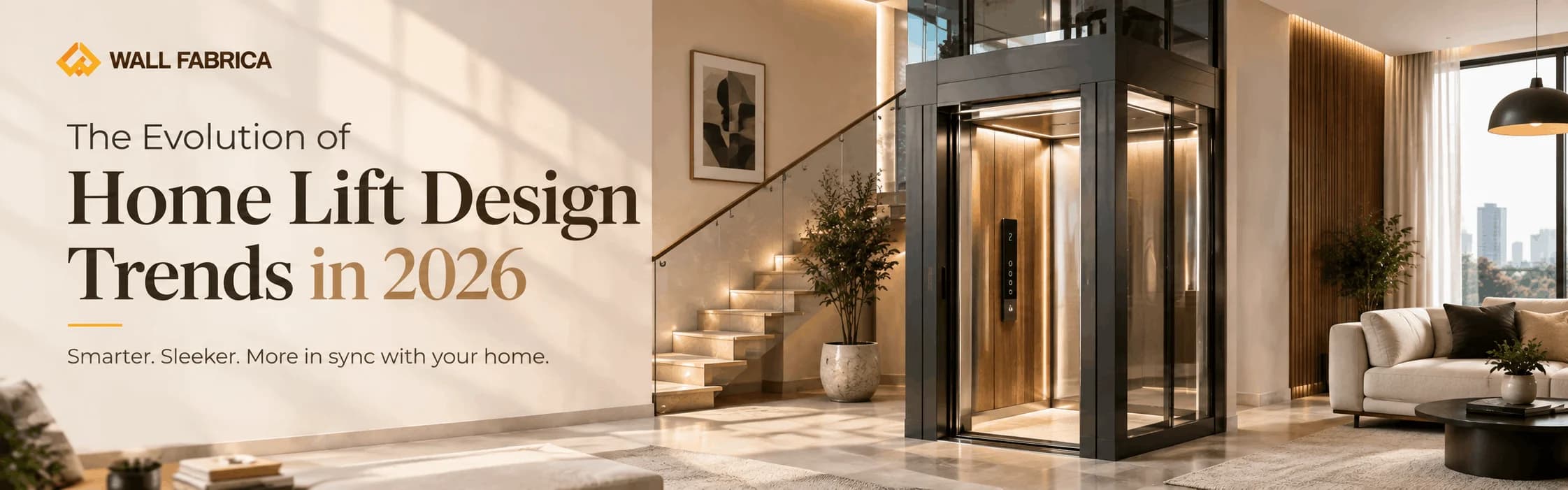
A glass cabin or glass lift shaft can allow natural light to travel through the space and reduce the enclosed feeling often associated with traditional lifts. Black-framed glass can create a contemporary industrial look, while glass combined with wood can feel softer and more residential.
In larger homes, a glass lift positioned beside a staircase or within a double-height space can even become an architectural feature rather than something that needs to be hidden.
Good lighting can completely change the character of a small lift interior.
Instead of relying only on bright overhead lights, designers are using recessed LEDs, concealed strips and soft indirect lighting. Warm lighting can make materials such as wood and stone feel richer while creating a more comfortable atmosphere.
For a luxury home lift interior, a simple ceiling detail with integrated lighting can sometimes have a greater visual impact than adding several decorative elements to the walls.
Nowadays, homeowners looking for a more luxurious appearance are preferring stone and marble finished surfaces more.
Large format stone look panels can create a sophisticated backdrop in the cabin.Beige stones, subtle marble patterns and other natural looking finishes work particularly well with both warm wood and cold metallic accents.
These finishes can be especially effective when the lift opens into a foyer or staircase area where similar materials have already been used.
Not every home lift design needs to be bright and neutral.
Dark walnut, charcoal, smoked glass and darker stone finishes can create a dramatic, hotel-inspired atmosphere. When combined with warm lighting and subtle brass or bronze details, a dark lift can feel surprisingly elegant.
This style is particularly suited to larger homes and villas where the lift is intended to make a stronger visual statement.
Perhaps the most important trend in home lift interior design in 2026 is that homeowners are no longer designing the lift in isolation.
They tend to match it with the aesthetics and theme of rest of their home.They make sure wood finish would complement the staircase. Metal accents should match with the hardware installed elsewhere in the room.For a broader look at integrating a home lift into residential design,you can have a look over Kone India's article Different Types of Elevators: A Complete Guide for Beginners.
This creates a sense of continuity and makes the lift feel like a natural part of the home rather than an addition that was installed later.
The same design principles can be adapted to different homes and locations.
In Bangalore, contemporary glass, minimalist finishes, darker accents and sleek lighting can work particularly well with modern villas and urban homes. A combination of glass, wood and subtle metal detailing can create a sophisticated home lift without overwhelming the surrounding architecture.
In Jharkhand, homeowners can explore a warmer approach using wood textures, stone-inspired finishes, neutral colours and durable wall panels. For homes in Ranchi, Bokaro and Dhanbad, these materials can provide a balance between a premium appearance and practical everyday living.
This is where an interior brand such as Wallfabrica can look beyond individual walls and consider how finishes work together across spaces—from feature walls and staircases to the home lift itself.
There is no single home lift style that works for every house. A minimalist apartment may benefit from light colours and glass, while a luxury villa might suit dark wood, stone and warm metallic details.
That is why personalisation is becoming such an important part of residential lift design. Homeowners can choose finishes and details based on the architecture and personality of their space rather than simply selecting a standard elevator cabin.
For Wallfabrica, this creates an interesting opportunity: home lift walls can be treated as another interior surface to design, allowing textures, colours and materials to become part of a larger interior concept.
Home lift design in 2026 is ultimately about integration. The best-looking lifts do not feel like machines placed inside a beautifully designed home. They feel like another carefully planned part of the interior.
Whether it is warm wood, natural stone, glass, soft lighting or a simple minimalist finish, the goal is the same: create a home lift that is functional, comfortable and visually connected to the spaces around it.
For homeowners in Bangalore and Jharkhand, thoughtful material selection and customised wall finishes can turn an otherwise overlooked space into a subtle but memorable part of the home's design.