
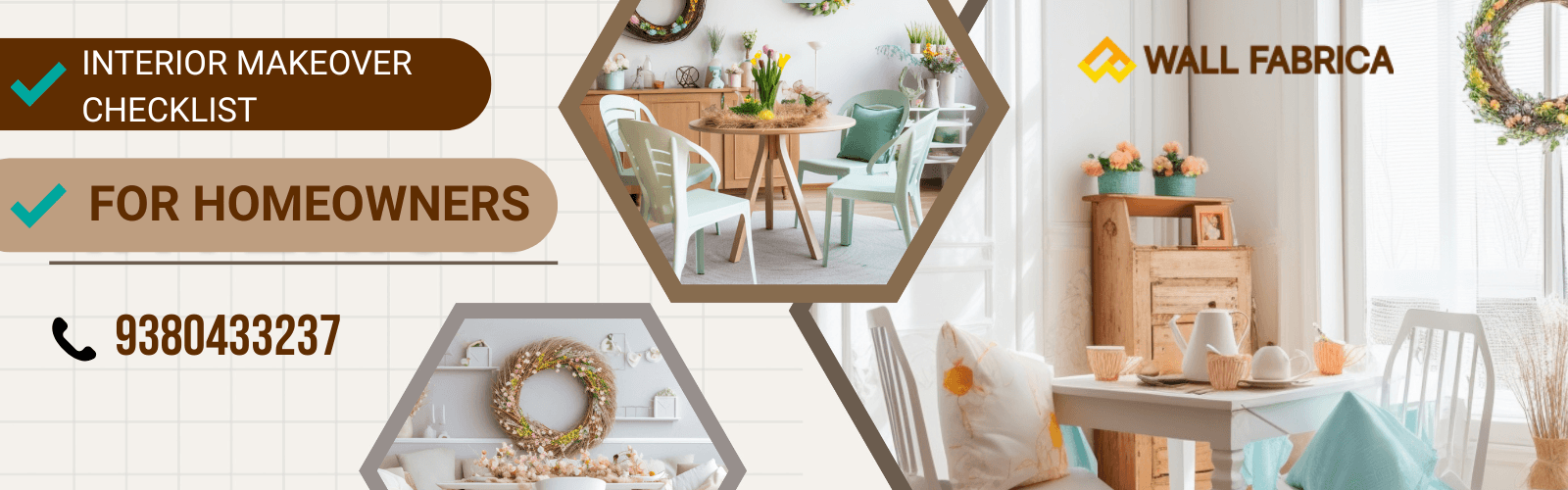
A home makeover does not always mean breaking walls, replacing everything or starting from scratch.
Sometimes, a new wall finish, better lighting, a fresh colour palette or one well-designed feature wall can make a room feel completely different.
The difficult part is knowing where to start.
Before choosing colours or browsing wall panel designs, it helps to have a simple plan. This interior makeover checklist can help homeowners move through the process without making unnecessary changes or stretching the budget.
Whether you are refreshing an apartment in Bangalore or planning a home interior in Ranchi or Bokaro, the same principle applies: plan first, decorate second.
Start with the most basic question:
What do you actually want to change?
Do not begin by choosing a colour or panel design. First decide what feels wrong with the current space.
You might want:
Your goal becomes the filter for every decision that follows.
For example, if your living room already has good furniture but feels plain, you may not need a complete renovation. A feature wall, improved lighting and a coordinated colour scheme could be enough.
A makeover becomes stressful when every attractive idea gets added to the plan.
Instead, divide your budget into three simple categories:
These are changes that genuinely need to happen.
These improve the appearance or usability of the room.
These are the finishing touches.
This approach helps you spend more on the things that actually matter instead of exhausting your budget on decoration first.
Your walls are one of the largest visible surfaces in your home, so their condition can influence the entire makeover.
Before applying a new finish, look for:
Do not simply cover a serious underlying problem with a decorative material.
If there is persistent dampness or a plumbing issue, identify and address the cause first.
For suitable surfaces, wall panels can become part of the makeover because they introduce a fresh decorative layer while reducing the visual impact of an imperfect existing finish.
According to Architectural Digest India, PVC panels are waterproof, non-porous and available in different colours and 3D designs, making them one of the wall-panelling options worth considering for interiors.
Once the wall condition is understood, you can start thinking about the visual direction.
Wall panels can completely change the character of a room, but the design should work with the rest of the interior.
Some popular directions include:
Do not choose a panel simply because it looks attractive in a catalogue.
Think about:
A wall should feel like part of the room, not like something added afterwards.
Colour is one of the easiest ways to change the mood of a room.
You do not need five or six different colours. A simple palette is often easier to maintain visually.
Warm beige + cream
Good for a relaxed and comfortable living area.
Grey + white
Works well for a cleaner, contemporary appearance.
Soft green + neutral tones
Can bring a more natural feeling into bedrooms or living spaces.
Warm wood + beige
Useful when you want the room to feel warmer without making it visually heavy.
If you are planning a more premium interior, our guide to Best Color Themes for Luxury Interior Designs can help you explore different combinations.
The important thing is consistency. Your wall panel, furniture, curtains, flooring and lighting should not compete with one another.
A makeover can sometimes feel incomplete simply because the lighting has not changed.
The same wall can look completely different under cool white lighting and warm lighting.
Consider:
Textured wall panels can particularly benefit from directional or accent lighting because light can highlight the depth of the surface.
For a bedroom, softer lighting can create a relaxed atmosphere.
For a living room, layered lighting can help separate the main seating area from a feature wall.
The goal is not to add lights everywhere. It is to give each important part of the room a purpose.
If your budget or time is limited, you do not have to makeover every wall.
Choose one important wall and make it the visual focus.
Good options include:
This works particularly well in apartments where a complete renovation may not be practical.
One well-planned feature wall can introduce colour, texture and personality without making the entire room feel over-designed.
For a Bangalore apartment, for example, a feature wall can be particularly useful when the room has limited floor area and you want to create visual interest without adding bulky furniture.
Once the major elements are complete, resist the temptation to fill every empty space.
Good interior design is not necessarily about having more things.
Try adding:
Add one element at a time and see how the room responds.
This is especially useful when you have already introduced a textured wall panel. A heavily patterned wall may not need several decorative objects competing with it.
Let the feature breathe.
Your home does not have to look exactly the same throughout the year.
Small seasonal changes can refresh the space without requiring another renovation.
This approach allows your interior to evolve without constantly changing the core design.
A beautiful interior is easier to enjoy when it is easy to maintain.
This is particularly important when choosing wall finishes for busy areas such as kitchens, bathrooms and living spaces.
For PVC wall panels, routine maintenance can be simple:
According to Architectural Digest India, PVC panels have a non-porous surface and are considered easy to maintain, which is one reason they are used in moisture-prone interior spaces.
The exact care requirements can still vary according to the panel's finish and installation.
Before calling the project finished, take a step back.
Ask yourself:
This final check is often more valuable than adding another decorative item.
A good makeover should not only look better in photographs. It should work better for the people living in the home.
The same planning approach works for homes in Ranchi and Bokaro.
Before selecting a wall finish or colour, consider:
You do not need to follow a completely different design style simply because the home is in Jharkhand.
Instead, adapt the design to the actual space, lifestyle and budget.
A successful home makeover does not begin with buying decorative products.
It begins with understanding what your home needs.
Set the goal. Plan the budget. Inspect the walls. Choose your materials. Build a colour theme. Improve the lighting. Create one strong focal point. Then add the finishing touches.
And most importantly, do not try to change everything at once.
A thoughtful wall panel, a better lighting setup and a coordinated colour palette can sometimes achieve more than a complete renovation filled with unnecessary changes.
At Wallfabrica, with Bangalore as our primary focus and Ranchi and Bokaro as important Jharkhand locations, we believe an interior should be more than visually attractive. It should be practical, maintainable and designed around the way you actually live.
Start with one room. Choose one clear direction. Then build your makeover step by step.